The Practical Workflow for Monogram Font Letter Illustration Floral Assets
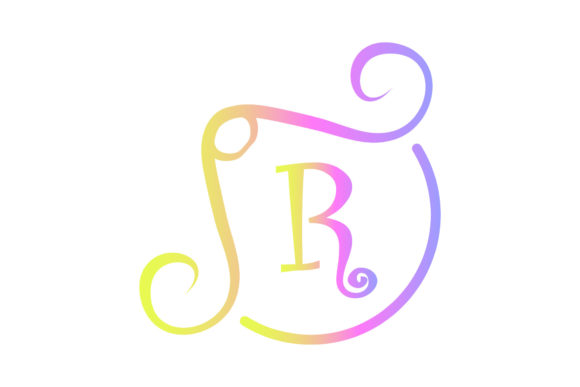
In the creative and professional landscape, visual assets are not just decorative elements; they are functional components that accelerate workflows and elevate outcomes. The Monogram Font Letter Illustration Floral set represents a specific category of design resource that combines typographic identity with artistic embellishment. At its core, it is a collection of illustrated monogram letters, each intricately paired with floral motifs, provided in five versatile file formats: AI, EPS, SVG, JPG, and PNG, all at a consistent canvas size of 1920 px by 1280 px. For creators, marketers, and business owners, these assets are tools, not just graphics. Their value is realized through their integration into a broader creative and production process.
Understanding the Asset’s Role in Your Process
Before diving into specific use cases, it’s crucial to frame Monogram Font Letter Illustration Floral designs correctly. They are foundational, editable assets. This means their primary function is often at the beginning or middle of a project timeline, serving as a starting block for customization rather than a final, fixed product. For a professional designing a brand identity for a boutique, these floral monograms could serve as the central visual for a logo or a series of branded materials. For a blogger, they might be imported into a layout to create distinctive headers for a series of posts on gardening or luxury lifestyle topics. The floral illustration aspect adds a layer of thematic context—conveying elegance, nature, growth, or organic beauty—which must align with your project’s overarching message.
This alignment check is a key part of the preparatory workflow. Assessing whether the aesthetic of these floral monograms complements your brand’s voice or project’s theme is the first practical step. Because the assets are editable, this isn’t a permanent commitment; colors can be adjusted, floral elements can be simplified or enhanced, and the monogram letter itself can be integrated with other typography. This flexibility places them in the category of modifiable core components, similar to templates or style guides, which you build upon.
Integration with Tools and Platforms
The provision of five file formats is a direct workflow consideration. Each format interacts with different software and platforms, dictating how you can use the asset in your process.
Vector Formats for Design and Editing
The AI and EPS files are primarily for use in professional design environments like Adobe Illustrator or CorelDRAW. Here, the Monogram Font Letter Illustration Floral is fully deconstructed. You can separate the letter from the floral elements, change stroke widths, recolor individual petals, or even extract the floral art to use independently. This is where deep customization happens. The SVG file serves a similar vector purpose but is critical for modern web and app workflows. It can be edited in vector tools, but its primary advantage is seamless integration into web development environments. An SVG monogram can be scaled infinitely without quality loss, making it perfect for responsive websites, where the same asset must look sharp on a mobile screen and a desktop monitor.
Using these vector files typically occurs during the design and development phase. A designer might open the AI file, customize the colors to match a brand’s Pantone palette, and then export a PNG for social media use. A web developer might take the provided SVG, inline it directly into the code for a client’s landing page, and manipulate its properties with CSS. This interoperability between formats for different stages—editing in AI, deploying as SVG—is a core workflow efficiency.
Raster Formats for Deployment and Production
The JPG and PNG files are the output formats. They are what you use when the design is finalized and needs to be placed into environments where vector editing isn’t possible or necessary. The 1920x1280 px canvas size is a practical specification. It’s large enough for most digital uses—website banners, blog post featured images, high-resolution social media graphics—without needing immediate upscaling. For print workflows, while this resolution is suitable for small to medium prints, for larger formats you would ideally start from the vector source (AI/EPS) to output a higher-resolution raster file tailored to the printer’s requirements.
In a common workflow, you might edit the vector file, then export a PNG with transparency for use in a video editing tool like Premiere Pro to create an animated intro for a YouTube channel. Or, you might use the JPG directly in a drag-and-drop email marketing platform like Mailchimp to build a visually appealing newsletter header. The key is understanding that the raster files are for final deployment, while the vector files are for preparation and customization.
Practical Implementation in Specific Workflows
Let’s examine how these assets move from being downloaded files to active parts of a project.
For Brand Identity Creation
A freelance designer tasked with creating a logo and brand suite for a florist or wedding planner might begin by browsing monogram styles. Upon selecting a suitable Monogram Font Letter Illustration Floral design, the workflow starts in Illustrator (AI file). The designer changes the initial color to the client’s chosen soft pastels, perhaps simplifies the floral details to ensure the logo isn’t too busy at small sizes, and experiments with placing the client’s company name alongside the monogram. Once approved, the designer exports multiple versions: a simplified SVG for the website logo, a high-resolution PNG for the client’s social media profiles, and a EPS file to send to a printer for business card production. The consistency of the 1920x1280 base size ensures that all these outputs start from a common, high-quality source, aiding in visual consistency across touchpoints.
For Content Creation and Digital Marketing
A blogger or social media manager running a lifestyle account can use these assets to create a series of cohesive visuals. The process here might be more rapid. They could open the PNG file directly in a simpler tool like Canva, overlay text announcing a new blog post “The Art of Botanical Design,” and publish it. However, a more efficient long-term workflow involves using the SVG. By uploading the SVG to Canva (which supports vector formats), they retain the ability to change colors week-to-week to match different content themes without losing quality. This approach turns a single download into a reusable template, saving time across multiple content cycles. The monogram acts as a recognizable visual anchor, making the content series instantly identifiable to followers.
For Product and Merchandise Design
Small business owners producing physical goods, like a maker of ceramic mugs or linen apparel, can integrate these illustrations into their production process. Using the EPS file with a print-on-demand service or a local screen printer, they can place the floral monogram on products. The editable nature is crucial here. The business owner might need to invert the colors for dark fabric or remove a background element for a cleaner print. Starting with the vector format allows these adjustments without paying a designer for further modifications, making the asset a cost-effective, long-term resource in their product development pipeline.
Tips for Organization and Long-Term Use
To truly integrate Monogram Font Letter Illustration Floral assets into your workflow, consider file management and future-proofing.
First, upon download, immediately organize the five formats. Create a project folder and label the files clearly, perhaps “Monogram_A_Floral.ai,” etc. This prevents confusion later when you need a specific format. Second, if you customize the asset, save your edited versions as new, project-specific files. Never overwrite the original source files. This preserves the asset as a template you can return to for future, differently themed projects.
Regarding compatibility, the vector formats ensure long-term usability. Even if software changes, AI and EPS are industry-standard, and SVG is a web standard. This means the asset isn’t tied to a fleeting trend or a single platform. You can use it today in Illustrator and five years from now in a new design tool that supports these formats, protecting your investment in the resource.
Finally, consider output scalability. While the provided raster files are a fixed size, your needs may change. You might need a much larger banner. Knowing you have the AI file means you can scale the design to 5000px wide without any loss of detail, a critical factor for maintaining quality control as your projects or business grow.
Smooth Integration into Your Routine
The ultimate goal is to make these design assets work for you without friction. Start by identifying the point in your common projects where a distinctive, artistic letter mark would add value. Is it at the logo concept stage? Is it for creating recurring visual content? Then, map the file format to the tool you use most. If you live in the Adobe suite, the AI file is your starting point. If you work primarily in web tools, focus on the SVG.
Treat the Monogram Font Letter Illustration Floral not as a one-off graphic, but as a malleable component. By understanding its role as an editable core element, its interaction with different software through specific formats, and its application across branding, content, and product workflows, you transform a downloaded file into a practical, repeatable part of your creative process. This mindset turns static assets into dynamic tools that enhance efficiency, consistency, and the overall quality of your visual output.